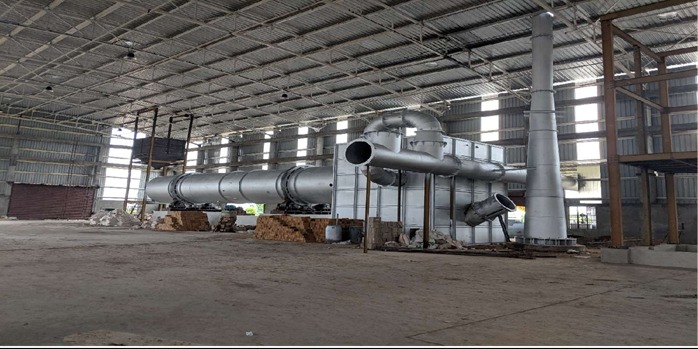
Our partnership with leading manufacturers and other equipment providers enables us to:
• Deliver customized, end-to-end solutions for coir fiber extraction, processing, and product manufacturing
• Optimize operational workflows and enhance production efficiency
• Support innovation adoption and technology integration in traditional industries
• Provide expert guidance on machinery selection, installation, and maintenance
• Provide ongoing business governance and training to make your business successful.
At EcoNexus International Ltd, we are committed to empowering businesses in the coconut industry with the knowledge, tools, and necessary partnerships you need to succeed in a competitive marketplace. Whether you are looking to scale your operations, improve product quality, or innovate your processes by setting up something new, we are here to help you achieve your goals.
Examples of our Solution:
Unlock the full potential of your coconut husk grow bags with our cutting-edge machines, and rest assured—we’ll buy back every high-quality product you produce, ensuring your success and sustainability
Solution for Coco Peat production: Setting up a coconut husk based manufacturing plant offers a sustainable and profitable opportunity to process abundant, often discarded coconut husks into high-demand products like coir fiber and coco peat for agriculture, horticulture, and industrial applications. The plant requires a strategic location near coconut farms, automated machinery (e.g., crushers, decorticators, and drying equipment), and a workforce of 20-50 employees. By implementing eco-friendly practices, ensuring regulatory compliance, and targeting local and export markets with products like ropes, mats, and grow bags, the plant can achieve a 20-30% ROI within 3-5 years. Challenges like high salt content in coir and supply chain disruptions can be mitigated through thorough washing processes and local sourcing, positioning the business as a leader in sustainable manufacturing.
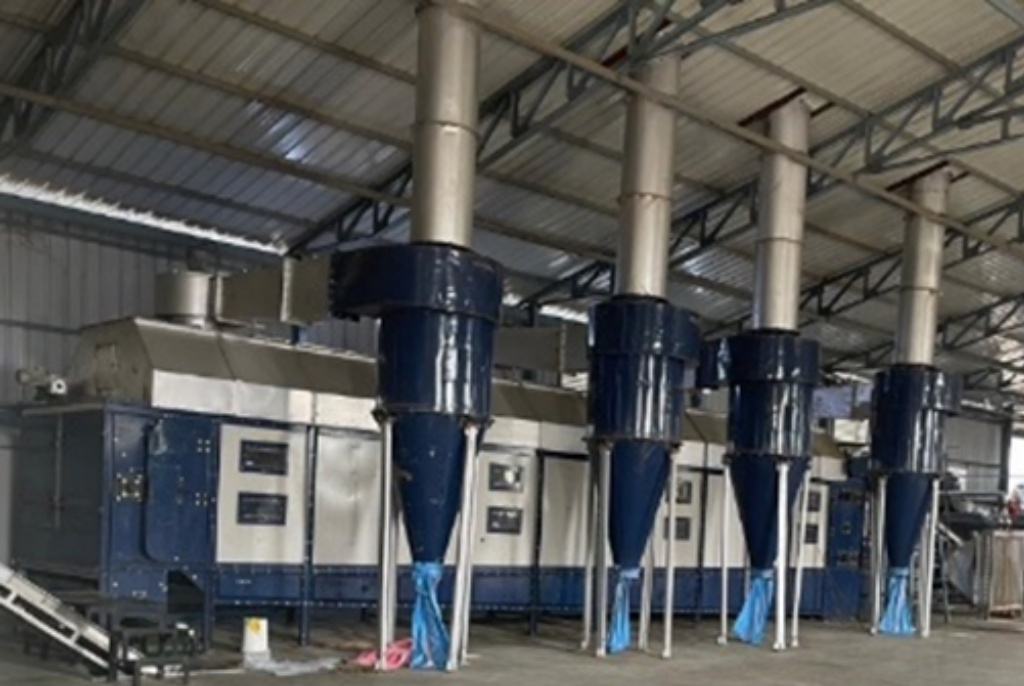
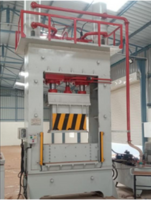
Solution for Coco Peat production: with the same processing plant set up as above, you have the opportunity to produce eco-friendly grow bags from coco peat and coir fiber, meeting the rising demand in agriculture, horticulture, and hydroponics. The process involves shredding husks, separating and washing coco peat, blending with coir fiber, and forming biodegradable grow bags, targeting markets in North America, Europe, and local regions with organic certifications.
Solution for Rubberized Coir Sheet Production: At EcoNexus, we provide a modular production system that turns raw coconut husks into high-quality rubberized coir sheets. The process includes fiber extraction, cleaning, and forming into felt sheets, followed by natural latex application and curing. The result is a durable, eco-friendly product ideal for industrial and commercial use.
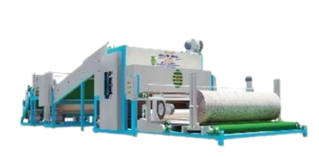
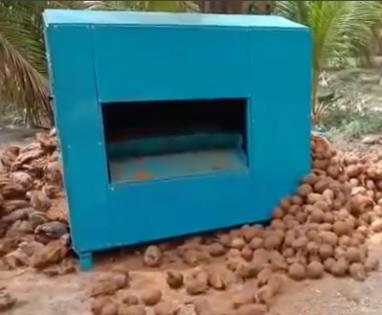
Solution for Coco Coir Nesting Pads Production: A coco coir nesting pad manufacturing plant offers a sustainable and profitable venture by transforming coconut husks into eco-friendly nesting pads for poultry and pet bedding, capitalizing on the growing demand for biodegradable, absorbent, and odor-resistant alternatives to traditional materials. Located near coconut farms to minimize raw material costs, the facility requires a 1-acre site, automated machinery (e.g., Dehusking machine, husk shredders, decorticators, washing systems, our award winning needle flet machines and pad-forming presses), and a workforce of 15-30. The production process involves shredding husks, separating and washing coco peat and coir fiber, blending them for optimal absorbency and durability, and compressing the mixture into nesting pads, which are then dried and packaged for distribution to poultry farms, pet stores, and export markets in Asia, Americas and Europe.
Solution for Coconut Charcoal Production: A coconut-based charcoal manufacturing plant presents a sustainable and lucrative opportunity to produce high-quality activated charcoal and briquettes from coconut husks and shells, catering to growing demand in industries like water purification, air filtration, and barbecue fuel. Strategically located near coconut farms to reduce raw material costs, the facility requires a 1-2 acre site, specialized equipment (e.g., carbonization kilns, grinders, activation furnaces, and briquette presses), and a workforce of 20-40. The production process involves collecting and shredding coconut husks/shells, carbonizing them in low-oxygen kilns, activating the charcoal with steam or chemicals for enhanced porosity, and forming briquettes or powdered charcoal for packaging, targeting domestic and export markets in North America, Europe, and Asia. By implementing eco-friendly carbonization methods, ensuring compliance with environmental regulations, and securing quality certifications, the plant can achieve a 20-35% ROI within 3-5 years, capitalizing on the global shift toward sustainable, high-performance charcoal products.