
Dear reader,
How are you doing? My intension in these articles is to share with you some snippets about
the coconut and its journey from Africa to India into its current place into the global
Agriculture and Horticulture Industry, its applications and usage, products and bi products
and benefits that don’t meet our eye at a surface level. While everyone in the world is talking
about AI and Sustainable practices, I want to take you into our journey into the Agri Industry
in the coming days, weeks, months….
Ok let us start with the coconut.
Coconut palms thrived naturally in coastal regions, and their buoyant, water-resistant nuts
could float long distances across oceans and still germinate — aiding their spread to remote
islands. While Southeast Asia (especially the Philippines, Indonesia, and Malaysia) is
considered the primary centre of origin of coconuts due to their greatest genetic diversity,
there’s strong evidence that coconuts were also independently domesticated on the
eastern coast of Africa and the Indian Ocean islands
While the coconut husk is considered a waste, it is the very essence of coco peat (also
known as coir pith or coco coir) and coir fiber. This agricultural by-product has transformed
into an eco-friendly powerhouse, especially in horticulture and hydroponics now a days.
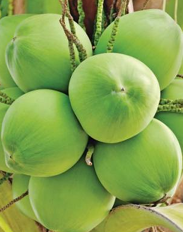
A Timeless Presence in India
The coconut’s roots in India stretches back millennia. Imagine the Valmiki Ramayana,
written around the 3rd Century BC, already mentioning coconuts in its Kishkindha Kanda and
Aranya Kanda. This suggests the coconut was a part of Indian life
during the post-Vedic period. Later literary works, like Kalidasa’s
Raghuvamsa and Sangam literatures, further solidify its ancient
presence. It’s fascinating that even the famous 13th-century
traveller, Marco Polo, called it the “Indian Nut” – a detail that still
intrigues historians today!
Coir: The Fiber that Sailed and Carpeted the World
Beyond its fruit, the coconut’s fibre, coir has an equally impressive history. For centuries,
Indian navigators bravely sailed the seas to Malaya, Java and even the Arabian Gulf, relying
on coir for their ship’s cables. 11th Century Arab writers marvelled at its extensive use in
rigging and as fenders.
The coir industry’s reach wasn’t limited to the East. Before the mid-19th century, coir
production was already a presence in the UK. A pivotal moment came in 1840 when Captain
Widely, alongside Captain Logan and Mr. Thomas Treloar established the renowned firm
Treloar and Sons in Ludgate Hill, England, specifically for manufacturing coir into various
floor coverings.
A Pillar of Employment and Craftsmanship
Back in India, the organized coir manufacturing industry for mats and other floor coverings
kicked off on a factory basis over 150 years ago. The trailblazer was Mr. James Darragh, an
adventurous Irish-born American national, who set up the first factory in Alleppey, Kerala, in
his pioneering spirit paved the way for countless Indian entrepreneurs.
Today, if you visit Karnataka, Tamil Nadu and Kerala, you’ll witness the incredible sight of
coconut husks being meticulously processed into fibers for beautiful coir products. This
industry is a true testament to community effort: women primarily excel in yarn spinning,
while men lead the product-weaving sector. The coir industry proudly stands as the largest
Cottage Industry, providing employment to over a million people. The coastal belt to the East
and West in India’s southern peninsular becomes the natural harbour, which has been a
vital trading hub for Europeans since ancient times, thanks to its strategic port and valuable
spices, further cementing its historical connection to the world of coir.

In agriculture and horticulture, coconut coir offers superior water retention—absorbing up
to 30% more water than peat moss—while maintaining excellent aeration and drainage. Its
natural neutrality means it requires no chemical adjustments, making it ideal for organic farming and seed starting. Coir chips provide structural stability and moisture retention, supporting healthy root development in container plants and hydroponic systems. Moreover, coir’s biodegradability and renewable nature align perfectly with today’s increasing demand for sustainable agricultural inputs.
The global coco coir and peat market is rapidly expanding, driven by environmental
awareness and the shift toward organic and sustainable farming practices. Asia-Pacific,
home to major coconut producers like India, Sri Lanka, and Indonesia, leads the market,
while demand grows worldwide for coir’s lightweight, eco-friendly properties in gardening,
horticulture, and even upholstery.
From its ancient Indian roots to its modern role as a green alternative in global agri and
horticulture, the golden coconut husk exemplifies how traditional natural resources can be
harnessed for sustainable innovation, nurturing plants and protecting the planet alike.
It’s truly remarkable how a simple coconut husk has shaped economies, supported
livelihoods and continues to offer sustainable solutions for our planet. What other humble
materials do you think have such a rich and impactful history?
Have you worked with coco peat or used it in your gardening or business practices? I’d love
to hear from you about your experiences in the comments!
Yours Truly
Rashmi